Walking into a convenience store beverage section in 2026, the "Sugar-Free" or "Zero Sugar" labels on products are no longer special selling points, but rather the "standard configuration." According to global market research institutions, the market share of reduced-sugar and sugar-free drinks has officially surpassed 60% this year.
What radical shifts in consumer behavior are hidden behind this revolution that began with "subtraction"? And who will define the "sense of sweetness" in the future?
Why Is the Global Beverage Market Shifting Entirely to "Sugar-Free"?
The momentum of this revolution is not due to a single factor, but rather the result of health awareness, government policies, and biotechnology intertwining:
- "Blood Sugar Management" Becomes a National Movement
With the popularization of wearable continuous glucose monitoring (CGM) devices, modern consumers' focus on the "Glycemic Index (GI)" has exceeded that of calories. People have realized that long-term intake of refined sugar is highly correlated with metabolic syndrome, mood swings, and skin aging (glycation). In 2026, consumers are pursuing stable, long-lasting energy rather than short-term blood sugar spikes. - The Push from Tax Systems and Regulations
More than 50 countries worldwide have implemented a "sugar tax." To maintain profit margins while remaining price competitive, brands have had to redevelop formulas on a large scale. This has prompted R&D centers to shift their gaze from traditional sucrose and high-fructose corn syrup toward high-tech sweet solutions. - Preventive Health of Gen Z and Gen Alphak
The younger generation's definition of health is "prevention is better than cure." They not only avoid full-sugar drinks but also reject chemically synthesized artificial sweeteners (such as aspartame). They crave "Clean Labels," leading to explosive growth in market demand for natural sweeteners.
The Protagonists of Future Sweetness: 2026 Natural Sweetener Trend Analysis
As artificial sweeteners gradually exit the stage, whoever can perfectly simulate the "mouthfeel" and "thickness" of sucrose will be the winner. Here are the three most promising star ingredients:
- Allulose: The Perfect Substitute
Allulose has become a darling of the beverage industry in 2026. It exists naturally in wheat and figs, and its most impressive qualities are its caramelization characteristics and full-bodied texture. Unlike traditional sweeteners that provide only "flat sweetness," allulose offers a "lingering finish" and "thickness" almost identical to sucrose, with calories near zero and no impact on blood sugar fluctuations. - Monk Fruit: Globalization of Eastern Wisdom
As a strong competitor to Stevia, monk fruit extract has become highly popular due to its lack of a bitter aftertaste. Through precise molecular purification technology, modern monk fruit sugar has overcome the herbal taste of earlier products, showing excellent integration with tea drinks and coffee. - Sweet Proteins: The Cutting Edge of Biotechnology
Sweet proteins like Brazzein or Thaumatin are becoming the secret weapon for high-end functional drinks. These are proteins extracted from tropical plants with sweetness thousands of times that of sucrose. Because they are proteins rather than carbohydrates, they pose zero metabolic burden on the body.
| Sweetener Type |
Source |
2026 Market Positioning | Flavor Performance |
| Allulose |
Natural Rare Sugar |
High-end RTD, Coffee Creamer | Closest to sucrose, possesses mouthfeel thickness |
| Monk Fruit Sugar | Fruit Extract | Clean Label, Healthy Tea Drinks | Pure sweet, natural, no chemical feel |
| Sweet Protein | Plant Protein | Extreme Functionality, Bio-tech Drinks | Extremely high sweetness, low usage amount |
The Balance of Visuals and Flavor: How Can Brands Break Through?
In the sugar-free revolution, the biggest challenge brands face is: How to make healthy drinks equally "tempting"?
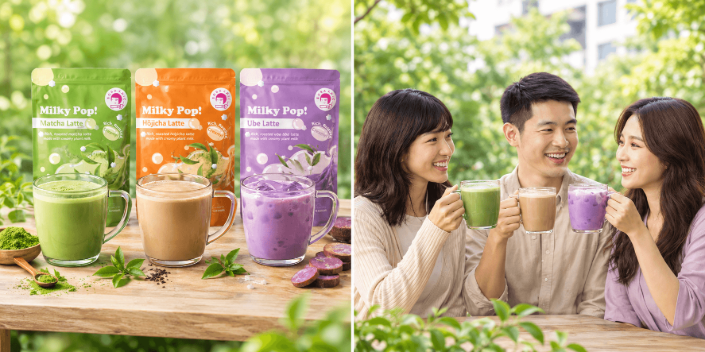
In marketing for official websites and social media, successful brands have begun using "high-sensory photography" to compensate for the psychological lack of sweetness. By capturing the transparency of liquid flowing between ice cubes, the embellishment of fresh herbs, and powerful splash dynamics, brands use visual "freshness" and a "premium feel" to convince consumers: Even without sugar, this is still a sensory feast.
The Future of Sweetness is a Choice of Freedom
The sugar-free revolution is not about depriving people of the right to enjoy sweetness, but about allowing us to shift from "addiction" to "freedom." When 2026's natural sweetener technology can achieve a perfect balance between flavor and health, beverages are no longer just simple thirst-quenching tools, but a part of our self-management.