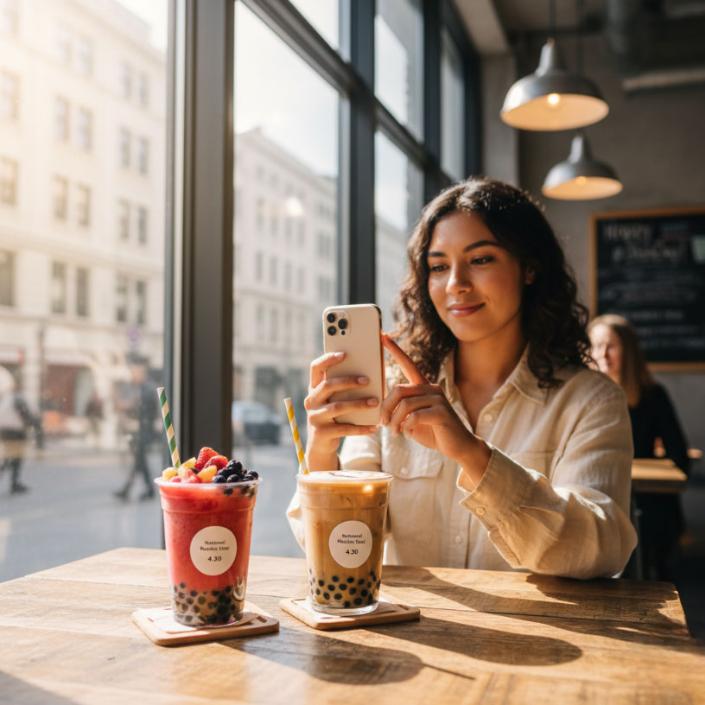
In 2018, Kung Fu Tea, a US-based bubble tea chain, established National Bubble Tea Day on April 30, the anniversary of the company's founding. Within a few years, what started as a brand promotion became a cross-industry cultural fixture, with other operators joining in and consumers treating it as a genuine occasion. A company anniversary turned into a category holiday. That process captures something essential about how bubble tea's global expansion has always worked: not through top-down coordination, but through the accumulation of countless local decisions.
That underlying logic is now shifting. Bubble tea has moved through a first phase driven by diaspora communities and social media virality. What is happening now is different in character, not just in scale. The forces driving the category forward are structural rather than organic, and they are changing what it means to compete in this market.
| Phase One | Phase Two (Current) |
|
| Primary audience |
Asian diaspora and students |
Global Gen Z and mainstream consumers |
| Consumption motivation | Nostalgia and novelty | Identity expression and social sharin |
| Product positioning | Asian street drink | Customizable everyday lifestyle drink |
| Consumption settings | Specialty shops, Asian restaurants | Grocery, offices, e-commerce, hotels |
| Spread mechanism | Word of mouth, diaspora networks | Social platforms, influencers, DIY kits |
Gen Z Redefined What Drinking Bubble Tea Means
Bubble tea's early international spread had a clear starting point. Asian diaspora communities carried it out of Taiwan and into the cities where they settled. It addressed a specific need: a taste that felt familiar, a sense of belonging in a cup. That logic helped the drink establish itself within particular communities, but it also placed a ceiling on who the audience could be.
Gen Z removed that ceiling. According to a 2022 Sodexo consumer survey, more than half of Gen Z respondents believe their food and beverage choices indicate who they are as individuals. Euromonitor's 2025 consumer research further confirmed that this generation is actively seeking personalized beverage experiences that reflect identity, mood, and lifestyle. Ordering a specific bubble tea is not a neutral consumption decision for this demographic. It is a deliberate statement.
Bubble tea's visual properties take on a different significance in this context. The tiger-stripe pattern of brown sugar syrup against the cup wall, the cheese foam slowly blending into the tea underneath, these are not just attractive. They are content worth recording and sharing. Localization has accelerated under exactly this logic:
- United States: Pearls have been integrated into smoothies and seasonal limited editions, reaching mainstream sports and lifestyle contexts
- United Kingdom: Extreme customization has become the category's identity, with some shops offering thousands of possible combinations
- Japan: Artisanal interpretation led to experimental pairings with ramen and rice dishes, producing a version of bubble tea that looks nothing like its Taiwanese origin
None of these movements was directed by brands. They are the result of consumers using bubble tea as a medium for cultural expression. Suppliers and distributors who wait for markets to fully form before responding are already late.
Food Technology Removed Bubble Tea from Its Dependence on Specialty Shops
In its first phase, bubble tea lived almost entirely inside food service channels. Specialty shops, franchise chains, and cafés all require on-site preparation, which means equipment, trained staff, and fixed locations. That model built category awareness effectively, but it came with an inherent ceiling on reach.
Instant-format tapioca pearls changed the equation. Maintaining acceptable texture without professional kitchen equipment made it viable to place bubble tea on supermarket shelves, in office pantries, in hotel amenity programs, and inside cross-border e-commerce packages. This is not a channel extension. It is a reconstruction of when and where bubble tea can be consumed.
Popping boba, derived from molecular gastronomy techniques, extended the category's sensory range in a different direction. The technology enables flavor to be independently encapsulated and released in specific contexts, which is why Japanese operators could experiment with boba in savory dishes at all. A 2026 industry report noted that ingredient suppliers have begun developing pearl formulations calibrated to specific markets' water chemistry, climate conditions, and local flavor preferences rather than supplying a single global standard. This level of customization was not achievable three years ago.
The Supply Chain's Role has Moved Beyond Materials Delivery
In bubble tea's first phase, the supply chain's job was straightforward: deliver consistent-quality pearls, tea, and syrup on time. That standard is no longer sufficient for a brand or distributor seriously entering global markets.
Entering the EU requires FSSC 22000 certification. The US requires FDA registration. Middle Eastern markets require halal certification. Ingredient labeling regulations vary significantly across jurisdictions. A supplier's ability to navigate these requirements alongside the buyer directly affects how quickly a product can reach a shelf. This has become a baseline capability, not an added service.
DIY kits brought bubble tea into corporate procurement, a market the traditional supply chain had no framework for. When an employee uses a DIY kit in an office, makes a cup of bubble tea, and posts about it on social media, that single action simultaneously delivers product experience, brand exposure, and consumer education. The supplier's contribution to this value chain extends well beyond what is inside the packaging.
Three Working Judgments for Buyers and Distributors
1. Customization capability is the entry requirement for Gen Z markets, not a differentiating feature.
Freedom of choice across sweetness, milk base, and topping combinations is a precondition for this demographic's consideration, not a bonus. A supplier's formulation flexibility directly shapes the downstream brand's competitive position.
2. Non-food-service channels are currently the least crowded opportunity in the category.
Grocery retail, office supply, e-commerce, and hotel amenities have very few established bubble tea suppliers at this point. Early entrants carry a structural advantage, not just a timing one.
3. Supplier certification and formulation capability determine the speed of market entry.
Complete documentation, the ability to adjust formulations for target markets, and cross-border logistics experience compress timelines from years to months. In a fast-moving beverage category, that compression is frequently what separates first-mover positioning from playing catch-up.
Bubble tea is not a finished story. For distributors and buyers, the category right now resembles specialty coffee in the early 2010s: consumer demand is established, the cost of market education has largely been borne by others, but the pool of suppliers who have actually built the right supply chain remains thin. That window does not stay open indefinitely.
If you are evaluating bubble tea sourcing or looking for a supply partner, contact the BOBA CHiC trade team. Starting with samples is the right first step.