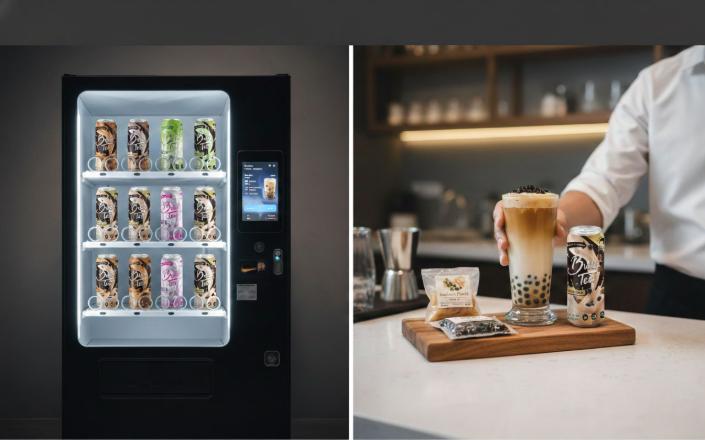
Before discussing the channel strategy for bubble tea, one common misconception is worth addressing upfront. Ready-to-drink canned bubble tea and freshly made hand-shaken bubble tea are not competing for the same consumer at the same moment. They serve different consumption occasions, follow different channel logic, and in commercial terms, they are complementary rather than substitutes.
For buyers, the real question is not which format is better. It is the format that fits your channel. This guide breaks down the core differences between the two and identifies the three commercial settings where each performs most effectively.
Core Differences Between The Two Formats
| Dimension |
Ready-to-Drink (RTD) |
Hand-Shaken Freshly Made |
| Convenience |
Open and drink, no time constraints |
Requires waiting or delivery time |
| Shelf life | Ambient storage for months, flexible supply chain | Best consumed within 2 to 4 hours |
| Experience | Standardized quality, consistent every time | Customizable sweetness, ice, and toppings |
| Barrier to entry | No equipment or trained staff required | Requires premises, tools, and preparation expertise |
| Channel fit | Grocery, vending, e-commerce, corporate supply | Specialty shops, restaurants, delivery platforms |
Each solves a different supply and consumption problem. The customization and freshness of hand-shaken bubble tea cannot be fully replicated by RTD. The storage convenience and zero-equipment barrier of RTD open channels that no hand-shaken shop can reach.
Three Commercial Settings That Are Changing
1. Unmanned retail and vending
RTD bubble tea's advantage in unmanned retail comes from its structural characteristics, not its branding. Vending machines and unstaffed stores cannot support the equipment and labor that freshly made drinks require. Ambient storage and standardized packaging make RTD the only viable bubble tea option in these environments.
- No staff operation required, available for purchase 24 hours a day
- Ambient storage removes cold chain logistics costs
- Standardized packaging suits shelf display and inventory management
For distributors, unmanned retail is one of the least crowded channel settings for bubble tea at this point. Brands that enter early hold a clear advantage in shelf acquisition because the number of RTD bubble tea products currently available for this setting remains limited.
2. Cross-sector Food and Beverage
Cafés, specialty restaurants, and light-meal shops want to add beverage options but typically lack the capacity to invest in the equipment and staff that fresh pearl preparation requires. Instant kit formats address this directly, allowing operators to add bubble tea to their menu without changing their kitchen setup.
- No pearl cooker or sealing machine needed, preparation completed in 30 seconds
- Low waste risk, prepared on demand without advance stock preparation
- Strong visual impact, effective at raising average transaction value
This model is particularly appealing for small food and beverage operators because it reduces the barrier to entering the bubble tea category from requiring equipment investment to requiring a single kit. For suppliers, this setting represents a market that previously did not exist, rather than share taken from the existing specialty shop channel.
3. Corporate Procurement and Office Environments
Office environments are a market that the bubble tea supply chain had almost no presence in until recently. Traditional delivery faces two structural problems: pearls harden during transit as time passes, and melting ice dilutes the flavor. Both issues make it difficult to maintain drink quality in an office setting through delivery alone.
- RTD cans and instant kits hold quality regardless of transit time
- Corporate buyers purchase in volume with stable frequency, making them high-value accounts for suppliers
- DIY instant kits in office settings create additional team interaction and social sharing opportunities beyond the drink itself
Corporate purchasing decisions follow a different cycle from individual consumers. Once a supply relationship is established, switching costs are high and repurchase rates are stable. For bubble tea suppliers, the challenge of entering this market is less about product quality and more about being able to provide the pricing structure, delivery timelines, and certification documentation that corporate procurement processes require.
Start with The Channel, Then Choose The Format
The choice between RTD and instant kits should not begin with which product is better. It should begin with what problem your channel needs to solve. Three questions help buyers reach a faster answer:
- Does your channel have the capacity for on-site preparation? If yes, instant kits offer more customization range. If no, RTD is the only viable option.
- Is the target consumption occasion impulse or planned? Impulse purchase settings, such as grocery and vending favor RTD. Planned consumption, such as office orders and restaurant menus favor instant kits.
- How long a shelf life can your inventory management absorb? Short shelf life products carry a higher risk in cross-border logistics. Ambient long-life storage is a baseline requirement for international distribution.
None of these questions has a universal answer, but they shift the sourcing decision from comparing product specifications to confirming whether a supply chain can actually serve your channel. That is a more productive starting point.
If you are evaluating bubble tea formats or want to discuss which option fits your channel best, contact the BOBA CHiC team. We start from your channel requirements and work toward the right product direction from there.